
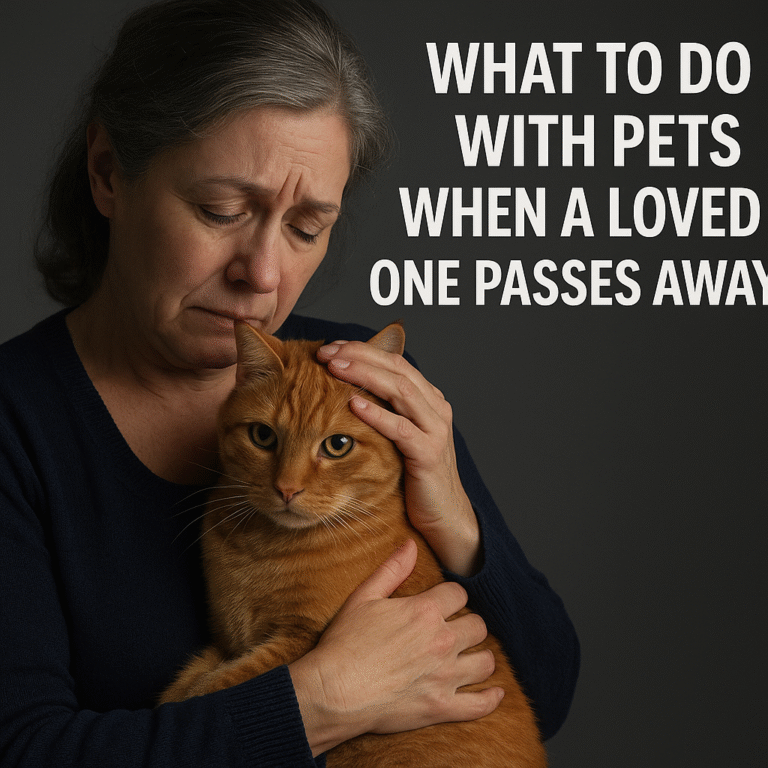
When someone dies, the first thoughts are usually about family, funeral arrangements, and personal belongings. But many people also leave behind much-loved pets. Dogs, cats, and other animals often feel like part of the family — and their future care needs to be considered too.
It’s important to consider what happens to pets when an owner dies, as they may need a new home and care.
If you’re wondering who looks after pets when someone dies, here are the main options and things to think about.
Many people are left wondering what to do with pets after death; it can be a challenging situation to navigate.
The most common solution is for a close family member to adopt the pet.
Advantages:
The animal may already know the family, making the transition easier.
Children or grandchildren often find comfort in adopting a deceased loved one’s pet as a living connection.
It avoids disruption and ensures continuity of love and care.
Challenges:
Not every family has the time, space, or finances to care for a pet.
Some pets have special needs (older age, medical conditions, behavioural challenges) which can be difficult to manage.
Sometimes the best option is for a trusted friend or neighbour to take the pet.
Advantages:
The pet may already be familiar with them.
It keeps the animal in a known environment or community.
The handover can often be arranged quickly.
Challenges:
The arrangement should be clear and agreed by everyone — misunderstandings can cause family conflict.
Make sure the new owner is genuinely able and willing to take responsibility long-term.

If no one close can take the pet, animal charities can help with rehoming pets after death.
National organisations:
Local options in Sunderland:
Pawz for Thought (cats, dogs, small animals)
Local veterinary practices may also know small foster networks.
Most charities will do everything possible to find a safe and loving home. Some even offer lifetime care schemes if arrangements are made in advance.
Many people don’t realise they can make pet inheritance planning part of their Will. This can include:
Naming a person who will take the pet (pet guardianship after death).
Leaving money to help cover food, vet bills, and care.
Registering with charity guardian schemes (like Dogs Trust or Cats Protection).
This ensures the pet’s future is secure and avoids sudden, stressful decisions for the family.
In some cases, there’s no immediate solution. If that happens:
Short-term pet care after bereavement may be available through charities.
Neighbours or friends may be able to provide temporary care until a permanent home is arranged.
Veterinary practices may sometimes help with emergency boarding for a short time.
The key is to make sure the animal isn’t left alone for too long and continues to have food, shelter, and companionship.
Pets grieve too. They may become withdrawn, restless, or eat less after losing their owner.
Keeping routines as stable as possible (feeding times, walks, familiar bedding) can help.
For families, deciding what to do with pets when a loved one dies can feel like another layer of grief — but it can also be a source of comfort. Many find that caring for the pet helps them through their own loss.
After a bereavement, it’s natural to worry about pets left behind after death. Whether the animal stays with family, moves in with a friend, or is rehomed by a charity, the most important thing is that it continues to be loved and cared for.
If you are making funeral arrangements and are unsure about caring for pets after someone dies, our team at Tony Clarke Funeral Directors can signpost you to local organisations and give practical advice.
📞 Contact us on 0191 565 6055 if you’d like confidential support.
You can find more practical guidance on our Funeral Advice page.