
Guidance on scattering, keeping, burying and memorialising ashes in Sunderland.
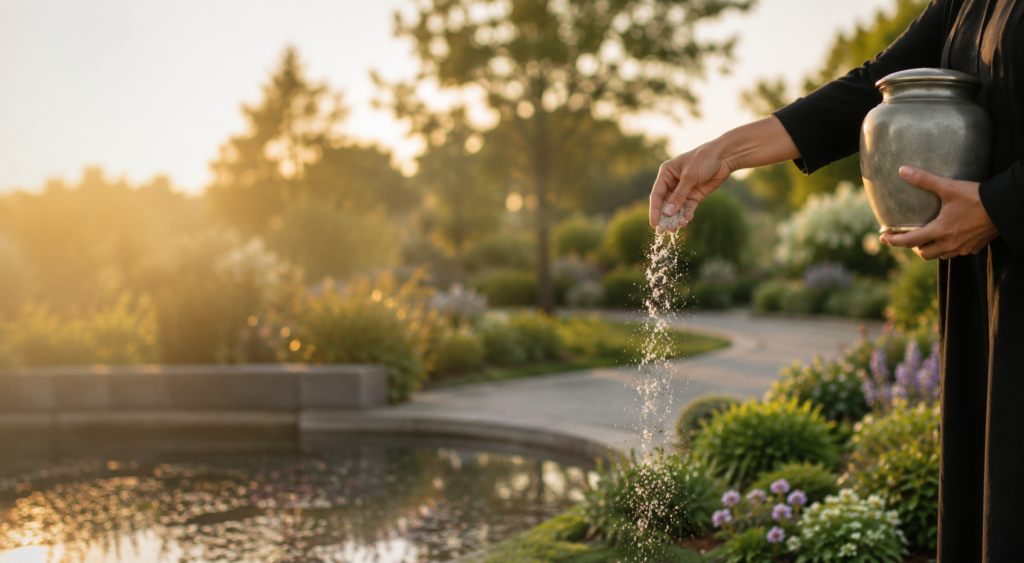
Guidance on scattering, keeping, burying and memorialising ashes in Sunderland.
After a cremation, many families ask the same question — what should we do with the ashes?
There is no right or wrong choice. What matters most is choosing something that feels right for you and reflects the wishes of your loved one.
Below, we’ve explained the most common options available in the UK, along with a few more personal and unique ways families choose to remember someone.
After a cremation, families in Sunderland have several choices. Some people want ashes to stay somewhere local and easy to visit. Others prefer to keep them at home, scatter them somewhere meaningful, divide them between family members, or take them to a place that meant something special.
Common choices include:
Keeping ashes at home in an urn or keepsake
Scattering ashes at Sunderland Crematorium Garden of Remembrance
Interring ashes in a cemetery, churchyard or family grave
Scattering ashes at the coast, beach or another meaningful place
Using ashes in memorial jewellery, glass, artwork or keepsake items
Dividing ashes between family members
Taking ashes abroad or to another part of the UK
There is no right or wrong decision. What matters most is choosing something that feels respectful, personal and suitable for your family.
Page information
This page is reviewed and maintained by Marek Clarke, Company Director at Tony Clarke Funeral Directors.
Last updated: 30 June 2026
This page provides general guidance for families in Sunderland who are deciding what to do with ashes after cremation. Options and local arrangements can change, so families should always check directly with the relevant crematorium, cemetery, landowner, organisation or official service before making final arrangements.
Tony Clarke Funeral Directors can explain the choices available and help families think through what may feel most suitable and respectful.

For many families in Sunderland, football is part of family life. If your loved one was a lifelong Sunderland AFC supporter, the Stadium of Light may feel like a meaningful place to remember them.
Sunderland AFC provides in memoriam information for supporters and families. The club’s current guidance says that fans wishing to leave ashes of a loved one at the Stadium of Light can deposit them at the memorial garden. Families are asked to contact reception when they arrive.
Because memorial arrangements can change over time, families should always check directly with Sunderland AFC before making plans.
For Sunderland supporters, this can be a personal way to keep a loved one connected with the club, the city and the memories they shared with family and friends.
Memorial arrangements can change, so families should always check current availability and requirements directly with Sunderland AFC before making plans.

Many families take comfort in bringing ashes home and keeping their loved one close.
Ashes can be kept in many different ways, including:
A traditional urn made from wood, brass, ceramic or metal
A decorative urn designed to look like an ornament or vase
A wooden casket or keepsake box
Small keepsake urns for sharing ashes between family members
Glass, resin or crystal memorial ornaments
A personal memorial area at home with a photograph, candle or flowers
Keeping ashes at home can give families time to decide what feels right. Some families keep ashes at home permanently, while others do so until they are ready to scatter, bury or divide them between relatives.

Scattering ashes is one of the most common and meaningful choices after cremation. Some families choose a peaceful crematorium garden, while others prefer a beach, woodland, countryside location, family garden or another place connected to their loved one’s life.
Ashes may be scattered in places such as:
Sunderland Crematorium Garden of Remembrance
A cemetery, churchyard or family grave area, where permitted
A beach, seafront or coastal location
A park, woodland, countryside walk or private garden
A meaningful place connected to the person’s life, hobbies or family memories
Before scattering ashes, it is important to think about permission, privacy, weather, access and whether family members may want a place they can visit again in future.
If you are considering scattering ashes abroad, you should check the rules for the airline and the country you are travelling to, as documents may be required.

Some families prefer ashes to be placed in a permanent resting place. This may be a cemetery, churchyard, family grave or dedicated ashes plot.
This option can provide:
A lasting place for family and friends to visit
A sense of tradition and structure
The option to add a headstone, plaque or memorial marker
A place for flowers, cards and quiet reflection
Ashes may also be interred in an existing family grave, but permission will usually be needed from the cemetery, churchyard, grave owner or local authority.
Costs and rules can vary depending on the location, so it is important to check the current process before making arrangements.

Some families choose to divide ashes between relatives, especially when several people would like to keep part of their loved one close.
This can be done using:
Small keepsake urns
Miniature caskets or personal containers
Small glass, crystal or resin keepsakes
Separate ashes containers for different family members
Dividing ashes can be helpful when family members live in different places, or when one person wishes to keep ashes at home while another would like to scatter or inter them somewhere meaningful.
This is a personal decision, and it is important that close family members are comfortable with the arrangement before ashes are divided.

Some families choose a personal keepsake that can be worn, displayed at home, or kept somewhere close. This can be a comforting way to remember a loved one after cremation.
Ashes can sometimes be incorporated into necklaces, pendants, rings, bracelets, glass ornaments, crystal pieces, resin keepsakes or other memorial items. Some families also choose keepsakes made from clothing, fabric, handwriting, fingerprints or other personal memories.
These items can provide a subtle and lasting connection, especially when ashes are being shared between family members or when someone wants a small remembrance item they can keep with them.

Many families choose to create a peaceful place of remembrance at home.
Options may include:
This can provide a quiet and personal place for reflection, helping families keep their loved one close in a way that feels meaningful and comforting.

Some families choose a more unusual or creative way to remember their loved one. These options are less traditional, but they can feel very personal when they reflect someone’s life, personality, hobbies or wishes.
Ashes can sometimes be incorporated into memorial diamonds, glass art, resin ornaments, portrait paintings, tattoos, fireworks displays, or specialist scattering services such as drone or aerial scattering.
These choices are usually arranged through specialist providers, and availability, costs, permissions and timescales can vary. Families should always check the details carefully before making a decision.
For the right person, a unique memorial can become a lasting tribute that feels personal, meaningful and different from a traditional urn or scattering.

In the UK, scattering ashes is generally treated in a relaxed way, but families should still act respectfully and check permission where needed.
If you are scattering ashes on your own land, permission is not usually needed. If you are scattering ashes on someone else’s land, such as private land, a park, sports venue, woodland or other managed location, you should ask the landowner or organisation first.
Ashes may be scattered at sea after cremation without a marine licence, but families should still follow environmental guidance and avoid scattering anything non-biodegradable, such as plastic, ribbon or artificial materials.
If ashes are being buried or interred in a cemetery, churchyard, family grave or ashes plot, permission will usually be needed from the cemetery, churchyard, grave owner or local authority. Fees may also apply.
If ashes are buried and later need to be moved, this may require official permission. This process is known as exhumation.
Because rules, permissions and local arrangements can vary, families should always check with the relevant crematorium, cemetery, landowner, organisation or official service before making final plans.
After cremation, ashes can be kept at home, scattered, buried or interred, divided between family members, placed in memorial jewellery or used in a more personal tribute. Some families choose Sunderland Crematorium Garden of Remembrance, a cemetery, a family grave, a beach, a garden, or another meaningful place.
Yes, Sunderland Crematorium has a Garden of Remembrance where cremated remains can be strewn or scattered. Families should contact Sunderland Bereavement Services directly to confirm the current process, fees and available arrangements.
Sunderland AFC provides in memoriam guidance for supporters and families. The club’s current information says that fans wishing to leave ashes of a loved one at the Stadium of Light can deposit them at the memorial garden. Families should always check directly with Sunderland AFC before making plans, as arrangements may change.
Ashes may be scattered at sea after cremation without a marine licence. If you are thinking about scattering ashes at a beach, seafront or another public place, it is sensible to check permission, privacy, weather conditions and whether the location is suitable.
Yes, ashes can sometimes be buried or interred in a cemetery, churchyard, family grave or dedicated ashes plot. Permission will usually be needed from the cemetery, churchyard, grave owner or local authority, and fees may apply.
Yes, ashes can be divided between relatives. This is often done using small keepsake urns, miniature caskets, personal containers or memorial keepsakes. It can be helpful when family members live in different places or want different ways to remember their loved one.
Yes, many families keep ashes at home in an urn, casket, keepsake box, decorative ornament or small memorial area. Some families keep ashes at home permanently, while others do so until they are ready to scatter, bury or divide them.
Ashes can sometimes be taken abroad, but airlines and countries may have their own rules. Families should check with the airline and the destination country before travelling, and they may need documents such as the death certificate and cremation certificate.
Yes. Tony Clarke Funeral Directors can explain the options available, including keeping ashes at home, scattering, interment, keepsakes, memorial jewellery and more personal memorial choices. We can help families think through what feels respectful, practical and suitable.
Choosing what to do with ashes can feel difficult, especially when different family members have different wishes.
At Tony Clarke Funeral Directors, we can explain the options clearly and help you think through what may feel most suitable for your loved one and your family.
We can discuss keeping ashes at home, scattering, burial or interment, dividing ashes between relatives, memorial jewellery, keepsake urns, garden memorials and more personal tribute ideas.
There is no pressure to decide straight away. Many families take ashes home first and make a decision later, when they feel ready.
For guidance, call Tony Clarke Funeral Directors on 0191 565 6055.